
When the goal is to achieve a roast so tender it earns the title “Melt-in-Your-Mouth Prime Rib,” the reverse sear method is the only way to go. This technique involves slowly roasting the meat at a very low temperature until it’s perfectly cooked through, and then blasting it with high heat at the very end to create a flawless, crispy crust. This simple reversal ensures a juicy, pink interior from edge-to-edge, eliminating the dry, gray band that often plagues traditional roasts.
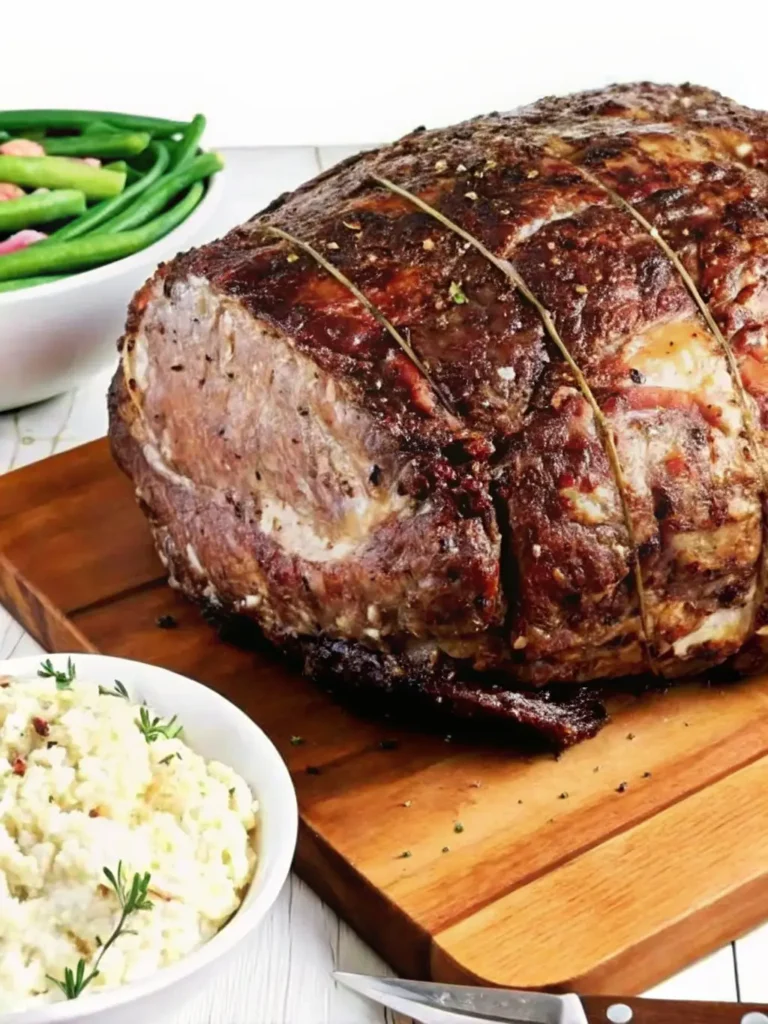
This perfect prime rib recipe focuses on a long, slow cook alongside a rich herb-butter rub that permeates the meat. By controlling the internal temperature precisely, we take the guesswork out of the process, guaranteeing that your bone in prime rib is tender, succulent, and worthy of any holiday table.
Table of Contents
Why You’ll Love This Prime Rib
- Melt-in-Your-Mouth Texture: The slow roast prime rib method breaks down connective tissue, ensuring unmatched tenderness.
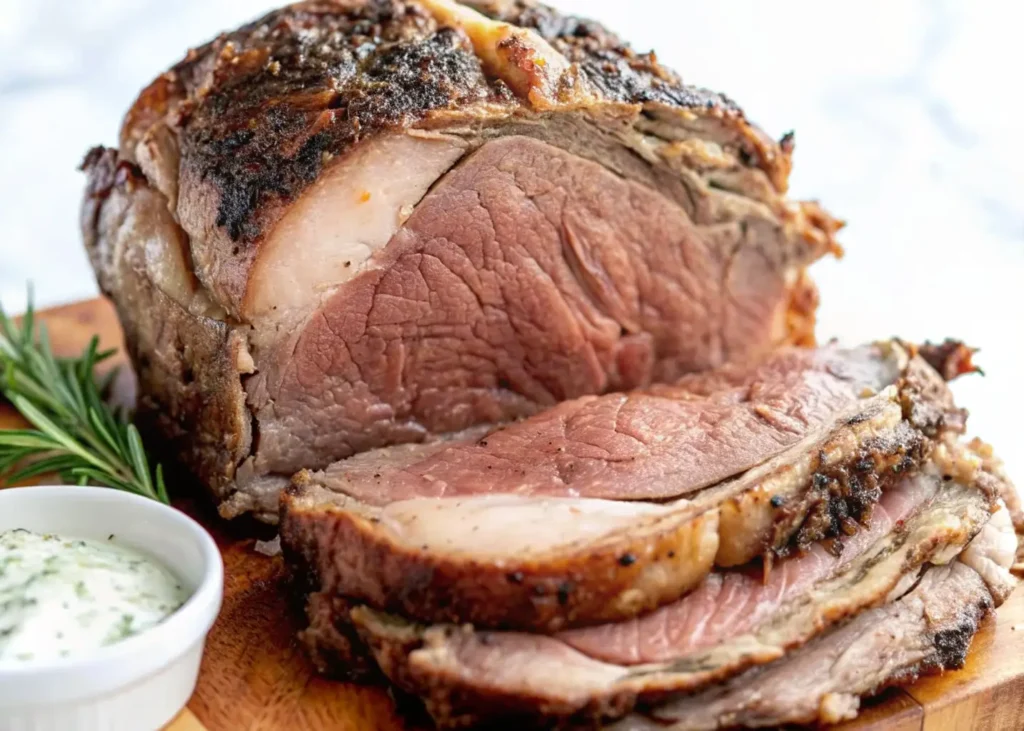
- Flawless Doneness: The reverse sear method prevents the overcooked gray band, guaranteeing a uniform pink interior.
- Flavorful Crust: A rich garlic-herb butter creates a savory, crispy crust during the final high-heat sear.
- Easy to Control: Using precise temperatures makes this recipe highly repeatable and reliable, even for novice holiday cooks.
Ingredients
For the Prime Rib Roast
- 1 (7–8 pound) Bone-In Prime Rib Roast (Standing Rib Roast)
- 2 Tbsp Kosher Salt (for dry brining)
- 1 Tbsp Coarse Black Pepper
For the Garlic-Herb Butter Rub
- 1 cup Unsalted Butter, softened (do not melt)
- 2 Tbsp Fresh Rosemary, chopped
- 2 Tbsp Fresh Thyme, chopped
- 6 cloves Garlic, minced or crushed
- 1 tsp Salt
- 1 tsp Black Pepper
Instructions (Step-by-Step)
Part 1: Dry Brine and Prepare (24 Hours Ahead)
- Dry Brine: At least 24 hours (up to 48 hours) before cooking, pat the roast thoroughly dry. Generously rub the entire roast with the Kosher salt and coarse black pepper.
- Refrigerate: Place the seasoned roast, uncovered, on a wire rack inside a baking sheet. Refrigerate until you are ready to cook. This dry brining process is essential for flavor and crust development.
Part 2: The Reverse Sear Slow Roast
- Bring to Room Temperature (Crucial): Remove the roast from the refrigerator and let it sit on a cutting board at room temperature for 2–3 hours before cooking. This ensures the internal temperature is even before roasting.
- Apply Rub: Preheat your oven to a low 200°F (95°C). In a small bowl, combine all ingredients for the Garlic-Herb Butter Rub. Rub the entire roast generously with the softened herb butter mixture.
- Slow Roast: Place the roast, fat-side up, on a rack fitted in a roasting pan. Insert a probe thermometer into the thickest part of the meat. Slow roast prime rib for approximately 3–4 hours, or until the internal temperature reaches 120°F for medium-rare (see guide below).
- First Rest: Remove the roast from the oven, tent it loosely with foil, and let it rest for 30 minutes. DO NOT SLICE. Turn the oven temperature up to 500°F (260°C) during this time.
Part 3: The High-Heat Finish and Serve
- High Sear: Remove the foil and place the roast back into the preheated 500°F oven for 6–10 minutes(depending on the size of the roast) until a deep brown, crispy crust forms. Watch closely to prevent burning.
- Final Rest: Remove the roast from the oven. No further resting is required, as the slow cook already allowed the juices to set.
- Slice and Serve: Slice the roast against the grain into your desired thickness. Serve immediately with pan drippings.
Internal Temperature Guide (Pull from Oven at This Temp)
| Desired Doneness | Pull from Oven at Low Temp (200°F) | Final Temp (After Sear/Rest) |
| Rare | 115°F (46°C) | 125°F (52°C) |
| Medium-Rare (Recommended) | 120°F (49°C) | 130–135°F (54–57°C) |
| Medium | 130°F (54°C) | 140–145°F (60–63°C) |
Expert Tips
- Probe Thermometer is King: The low temperature cooking time is highly variable. You must rely on a probe thermometer to monitor the internal temperature.
- The 30-Minute Rest is Functional: The initial 30-minute rest is not just for juiciness—it’s necessary to allow the temperature to stop rising while you preheat the oven to 500°F for the final sear.
- The Low-Temp Advantage: Roasting at 200°F ensures the roast cooks evenly, guaranteeing a pink, juicy interior right up to the crust. This is how you achieve the true “melt-in-your-mouth” texture.
- Making the Au Jus: Pour 1–2 cups of beef broth and sliced onions into the bottom of the roasting pan before the slow roast. The drippings will blend with the broth. After the final rest, strain the liquid, skim the fat, and serve the rich pan liquid as an Au Jus.
Variations
- Boneless Roast: This perfect prime rib recipe works for a boneless roast as well. Use the same temperatures and method, but place it on a rack in the pan.
- Mustard Rub: For a tangier crust, rub the roast with a thin layer of Dijon mustard before applying the herb butter.
- Different Herbs: Swap the rosemary and thyme for a combination of fresh sage, oregano, and dried mustard powder for a different aromatic profile.
Serving Suggestions
Pair this tender reverse sear prime rib with luxurious sides:
- Potatoes: Creamy Horseradish Mashed Potatoes, Duck Fat Roasted Potatoes, or Scalloped Potatoes.
- Vegetables: Simple, elegant sides like Asparagus with Hollandaise Sauce, or Green Beans with Almonds.
- Sauces: Creamy Horseradish Sauce and the simple Au Jus made from the pan drippings.
Frequently Asked Questions
Q: Why is the reverse sear method better for “melt-in-your-mouth” tenderness?
A: The reverse sear method uses a long, slow cook (200°F) which gently raises the meat’s temperature. This minimizes the temperature difference between the outside and the center, allowing the meat to cook evenly while maximizing the tenderness and moisture retention, resulting in the “melt-in-your-mouth” texture.
Q: Can I use a boneless prime rib for the reverse sear method?
A: Yes, absolutely! This method works perfectly for a boneless prime rib as well as bone-in. Follow the same temperature guidelines and timing per pound.
Q: Can I skip the 2–3 hour rest time on the counter before cooking?
A: No, you should not skip this. Allowing the large roast to sit at room temperature for several hours is essential for uniform cooking. If you put a cold roast directly into the oven, the meat closer to the center will cook much slower, increasing the likelihood of the outer edges drying out.
Q: My crust isn’t crispy after the final sear. What went wrong?
A: This usually means your oven wasn’t hot enough. Ensure your oven is truly preheated to 500°F (260°C) before putting the roast back in. Also, make sure the roast is thoroughly dry before applying the rub, as moisture inhibits crust formation.
Melt-in-Your-Mouth Prime Rib (Ultimate Reverse Sear Method)
Equipment
- Roasting pan with rack
- Probe or Digital Meat Thermometer
- foil
- Sharp Carving Knife
- Cutting board
Ingredients
- 1 (7–8 lb) Bone-In Prime Rib Roast (Standing Rib Roast)
- 2 Tbsp Kosher Salt (for dry brining)
- 1 Tbsp Coarse Black Pepper
- 1 cup Unsalted Butter, softened (do not melt)
- 2 Tbsp Fresh Rosemary, chopped
- 2 Tbsp Fresh Thyme, chopped
- 6 cloves Garlic, minced or crushed
- 1 tsp Salt (for butter rub)
- 1 tsp Black Pepper (for butter rub)
Instructions
- Pat the roast dry and rub it thoroughly with kosher salt and coarse black pepper. Place uncovered on a wire rack set inside a baking sheet and refrigerate for at least 24 hours (up to 48).
- Remove the roast from the fridge and let it rest at room temperature for 2–3 hours before roasting to ensure even cooking throughout.
- Preheat oven to 200°F (95°C). Mix softened butter with rosemary, thyme, garlic, salt, and pepper. Rub the mixture evenly over the entire roast, including the sides and fat cap.
- Place the roast fat-side up on a rack inside a roasting pan. Insert a meat thermometer into the thickest part. Roast slowly for 3–4 hours or until internal temperature reaches 120°F for medium-rare.
- Remove roast from the oven, tent loosely with foil, and let rest for 30 minutes while preheating the oven to 500°F (260°C).
- Remove foil and return the roast to the hot oven. Sear for 6–10 minutes until a deep brown, crispy crust forms. Watch closely to prevent burning.
- Remove from the oven and slice immediately against the grain. Serve with pan drippings or a simple Au Jus.